
By: Dr. Steve Bettner
“Difficult times create strong men. Strong men create good times. Good times create weak men. And weak men create difficult times.”
— G. Michael Hopf, Those Who Remain
Family is everything. But even within that sacred bond, there are moments when love demands boundaries.
This article may ruffle feathers. It may challenge the way you think about helping your adult children. And that’s okay—it’s meant to. It’s not written from judgment, but from experience, reflection, and love.
At the center of this story is a belief I’ve come to hold strongly: Parents should not allow their adult children to live at home indefinitely, except in cases of crisis, health issues, or short-term transition. Even then, it must be done with intention and a clear plan. Otherwise, comfort can become a crutch—and that crutch can become a curse.
The Day That Changed Everything
In 1993, I was 19 years old. A sophomore in college. My mother had just passed away from cancer—a devastating loss. I had a dorm room during the school year, but when I was home, I lived with my father in our beautiful house on the water in Tampa Bay.
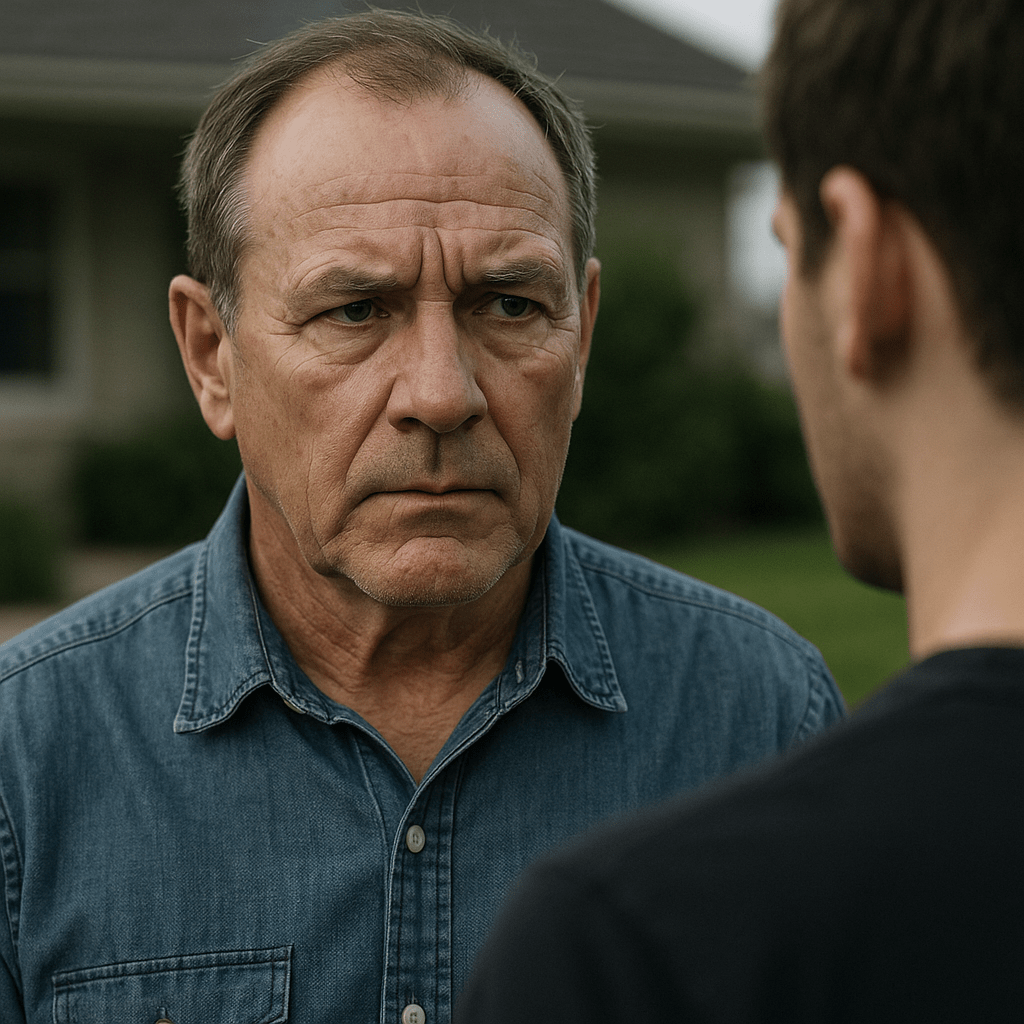
One day, not long after her funeral, my dad met me in the driveway. He didn’t wait inside. He didn’t ease into it.
“Son,” he said. “We need to talk.”
And then the sentence I never saw coming:
“It’s time for you to be out on your own.”
I was stunned. Angry. “Dad, what are you talking about?” I said. “It’s just you and me now. We have more than enough space. Why does this matter?”
He looked at me with a calm but serious face and said:
“If you don’t leave now, you’ll never become a man.”
At the time, it felt cold. I was grieving. I was comfortable. I didn’t want more change. I barely spoke to him for a year.
But now? I see it with perfect clarity.
His decision wasn’t harsh—it was holy. It was the hardest and most loving thing he could have done for me in that moment.
I got a job. I found an apartment. I struggled. I succeeded. And I became a man.
And here’s something important to say: My father would have never done that if my mother were still alive. She would have softened the message. She would have shielded me a little longer. And that’s part of the beautiful balance between mothers and fathers. But he knew what I needed, and he had the strength to deliver it.
There is an argument for adult children living with their parents.
Some families see multigenerational living as a strength. They point to cultural traditions where adult children remain at home until marriage, often pooling resources and caring for aging parents. Others argue that today’s economic climate—rising rent, student debt, and stagnant wages—makes early independence unrealistic.
These perspectives are not without merit. In fact, they come from a place of love and logic. But in my experience, what makes us who we are is not our comfort—it’s our capacity to rise through discomfort.
Why Parents Justify Keeping Their Adult Children Home — and What Really Happens
Let’s address the common arguments we hear from well-meaning parents:
| Justification | Reality |
| “They are saving money.” | Yes, but often at the cost of growth, maturity, and motivation. Most don’t use the money saved to build wealth they spend it on comfort. |
| “They’re not ready yet.” | No one is. Readiness is a myth. Growth happens after the leap, not before. |
| “It’s just for a little while.” | Months become years. Boundaries blur. And suddenly you’re parenting a 30-year-old. |
| “We enjoy having them around.” | But at what cost? Your marriage? Your peace? Your privacy? Your freedom? |
| “They have nowhere else to go.” | Then help them make a plan. Don’t make your home a permanent safety net. Be a launchpad, not a landing zone. |
What the Research Shows
- 52% of adults aged 18–29 now live with their parents—the highest rate since the Great Depression (Pew Research, 2023).
- A 2018 study from the Journal of Marriage and Family found that adults who remain at home longer are 25% less likely to marry by age 30.
- Psychologist Jean Twenge (iGen) notes a direct link between extended dependence and higher anxiety, delayed maturity, and low resilience.
- Harvard Business Review (2022) shows that early independence correlates with stronger financial literacy and adaptability in adulthood.
| Outcome | Co-resident Adult Children | Early Independence |
| Autonomy & resilience | ⬇️ | ⬆️ |
| Financial literacy | ⬇️ | ⬆️ |
| Anxiety & mental health | ⬆️ | ⬇️ |
| Parent marital satisfaction | ⬇️ | ⬆️ |
| Romantic and sexual intimacy | ⬇️ | ⬆️ |
Resilience Comes From Struggle: Real Stories
Before he became a household name, Steve Harvey spent three years living out of his car. After a failed marriage and a string of jobs that never fit, he found himself broke, sleeping in the backseat of a 1976 Ford Tempo, washing up in gas station bathrooms, and surviving on less than $50 a week.
He tells the story of one night in particular—a low point when he sat in his car crying and praying to God, asking why nothing was working.
“I was sitting in that car and said, ‘God, I’m trying to do what you told me to do. You said if I take one step, you’ll take two. I’m out here. I’m homeless. I’m out of options.’”
That same week, he checked his voicemail from a pay phone and heard two life-changing messages: one was from the Apollo Theater in New York, inviting him to perform on their legendary stage. The other was from a comedy club in Florida offering a paid gig.
He didn’t have enough money for both flights. But with a leap of faith—and the last of his gas money—he got to New York. His performance at the Apollo brought the house down. It launched a career that would soon explode with TV shows, bestsellers, and national tours.
But Harvey always credits being pushed into the unknown—and the support of his family, faith, and belief in his gift—as the catalyst. Had someone “rescued” him from his hardship too early, he believes he would have missed the very opportunity that changed everything.
“You don’t become great by being comfortable. You become great by surviving what was meant to break you.”
Before Tyler Perry built a billion-dollar entertainment empire, he was a young man in his early twenties, estranged from a violent father, barely scraping by in Atlanta. At one point, he was living in his car, working odd jobs, and sleeping in seedy motels and theater lobbies—all while chasing a dream no one else could see.
He poured his trauma and healing into writing. His first play, I Know I’ve Been Changed, was a deeply personal story about child abuse, forgiveness, and redemption. He used his entire life savings—around $12,000—to stage it in a small theater in Atlanta in 1992.
Only 30 people showed up—most of them were friends and family. It was a financial disaster. He went broke and nearly gave up. But he kept writing.
For six years, Perry faced closed doors, sleeping in his car between gigs. But his mother encouraged him to keep going, reminding him that the stories he was telling mattered.
Then, in 1998, everything changed. He restaged the play one more time—and this time, word of mouth took over. The crowds came. The show sold out. And that single success launched a wave of hit plays, leading to his signature character, Madea, and eventually a studio, a film career, and one of the largest Black-owned production companies in the world.
Today, Perry owns a 330-acre studio in Atlanta—the same city where he was once homeless.
“Had everything gone right in my life, I wouldn’t be where I am today. I had to walk through the fire to learn how to build.”
He often reflects that if someone had stepped in and “saved” him, he might have never discovered the depth of his purpose. He didn’t need to be rescued. He needed to be refined.
Greatness often comes from those who had no fallback plan:
- Oprah Winfrey was fired and told she wasn’t fit for TV.
- J.K. Rowling wrote Harry Potter while raising a child alone on welfare.
- Dwayne “The Rock” Johnson had just $7 to his name when he started over.
These stories didn’t happen in comfort. They happened in chaos. And they became the bedrock of purpose and pride.
To the Mothers: You’re Not Failing by Letting Go
This one’s for the moms.
You are the heart of the home. Your nurturing is a treasure. But the most powerful thing you can give your child isn’t comfort—it’s confidence.
You’re not being mean when you say, “It’s time.” You’re being wise. You’re trusting in who you raised. You’re giving them the chance to become.
Setting boundaries doesn’t make you a bad parent. It makes you a brave one.
To the Fathers and Father Figures: Be Patient, Be Loving, Be Clear
Men, this part is for you.
Leadership in the family is not about control—it’s about clarity. It’s about compassionate direction. My father’s method may have felt abrupt, and I’m not saying it’s the right one for everyone. But the principle behind it is universal: We raise adults, not dependents.
If you’re in this situation, consider:
- Speak with love, not anger.
- Offer a timeline and be clear about expectations.
- Help them with resources, not rescues.
- Be firm—but always lead with heart and humility.
To Young Adults: Don’t Wait to Launch
If you’re reading this and still living at home, here’s the question:
Are you growing… or are you hiding?
The world won’t wait for you to be ready. The longer you delay independence, the more it slips through your fingers.
Get a job. Find roommates. Learn budgeting. Fail. Grow. Repeat. That’s how you build confidence, not just a résumé.
You’ll never experience the joy of self-made success until you’ve gone through the grind.
This may be the most brutally honest thing I say in this blog:
Your parents need you to leave… so they can fall in love with each other again.
Yep. That’s right. Let’s get real.
When you’re gone, they get to be teenagers again:
- Walk around the house naked.
- Dance in the kitchen in lingerie.
- Make love on the living room couch.
- Go skinny dipping without a care.
- Laugh and reconnect without filtering every word.
But when you live at home, your presence—though loved—forces them back into “parent mode.” They can’t fully relax. They’re still worrying, budgeting, monitoring, and modifying their behavior to avoid “weirding you out.”
They gave you two decades of sacrifice. It’s their turn now.
Your continued presence, especially when unnecessary, can turn their love story into a dull roommate sitcom—more Felix and Oscar than The Notebook. And that’s not fair.
Do them a favor. Do yourself a bigger one. Launch.
Final Reflection: This Isn’t About Shame. It’s About Strength.
Living like Jose doesn’t mean lounging in comfort. It means living with peace, purpose, and personal responsibility.
It means learning to fish, not waiting for someone to serve you the catch.
I’ll always remember that driveway moment with my dad. It changed me. And maybe now, it can help change someone you love.
Let’s Continue the Conversation
This topic hits close to home—literally and emotionally.
We know this is not a one-size-fits-all conversation. But we believe it’s a necessary one.
We’d love to hear your thoughts. Whether you agree or disagree, your voice matters. Share your story in the comments or message us directly. Let’s have the courageous conversations that make families—and futures—stronger.
Live Like Jose. Struggle well. Grow strong. And never stop becoming.
 mexicanfisherman.com